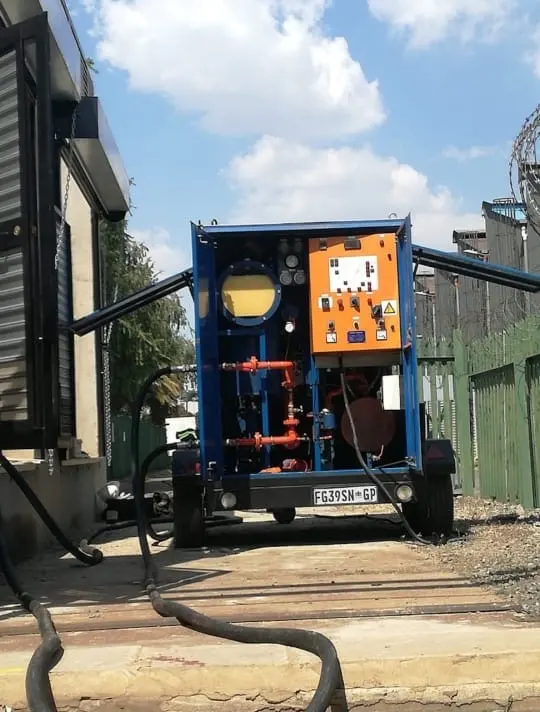
When does transformer oil need purifying?
Purification is the standard treatment when the oil is basically sound but contaminated. Typical triggers:
- Moisture content above the limit for the transformer's voltage class
- Dielectric strength (breakdown voltage) low or falling
- Dirty or cloudy oil, or a high particle count
- After a repair where the tank or active part was opened to air
- Before energising a new, relocated or refurbished unit
The decision comes from the oil analysis, not a calendar. That way you only pay for purification when the oil actually needs it.
What purification removes
| Contaminant | Why it matters |
|---|---|
| Moisture | The biggest enemy of insulation. Wet oil breaks down at lower voltages, and moisture migrates into the paper, where it accelerates ageing. |
| Dissolved gases | Air and fault gases reduce insulating performance. Removing them also gives a clean baseline for future DGA. |
| Particles & fibres | Conductive and fibrous particles create weak points that can lead to flashover. |
How on-site purification works
- Before sample. We confirm the oil's condition with laboratory results, so there's a clear starting point.
- Isolate and connect. With the unit safely isolated under your permit-to-work, the plant is connected to the transformer's valves.
- Circulate and treat. Oil is heated and passed through filters and a vacuum chamber, where moisture and gases are drawn off. It's returned to the tank and circulated for as many passes as it takes.
- After sample. A second sample confirms the oil now meets the target values.
- Return to service. The unit is topped up, checked, labelled with the purification date and oil batch, and handed back.
Purification is not regeneration. Purification is a physical process. It removes water, gas and particles, but it can't reverse chemical ageing. If the oil is badly oxidised (high acidity or sludge), we'll tell you, and advise whether replacement is the more economical option.
Why purify on site?
- Less downtime. The transformer stays in place. No removal, transport or re-installation.
- Lower cost. Treating existing oil costs a fraction of replacing it with new oil.
- Less waste. Reusing good oil means less oil to dispose of and less new oil to buy.
- Proven results. Before-and-after laboratory results show exactly what was achieved.
Top-ups, oil replacement and used oil
Where oil levels are low, we top up with compatible new insulating oil and record the batch. Where oil is beyond treatment, we drain and replace it, and remove used oil through registered recyclers.
Purification treats the symptom. If moisture is getting in, we'll also find and fix the cause, usually a saturated breather or a leaking gasket, through our mechanical repair service.